What your body is trying to tell you?
Have you ever wondered what your body is trying to tell you?
Most people only begin to pay attention to their body when something feels wrong — when there is discomfort, fatigue, or illness. Yet long before symptoms become strong enough to demand attention, the body is already communicating. This all happens naturally, without any conscious effort on our part. The question is not whether the body speaks… but whether we are listening.
The Body as a Messenger
In my experience, the body is not working against us — it is working for us.
It is our best friend, especially if we listen to the whispers before they become screams.
Symptoms are often seen as something to suppress or get rid of as quickly as possible. While relief is important, and in many cases necessary, it is also worth considering that the symptom itself may be carrying a message.
The body reflects what has built up over time — physically, emotionally, and mentally. Tension, stress, unresolved emotions, and ongoing patterns of thinking can all influence how the body responds.
When we begin to see symptoms in this way, they can be understood as signals rather than problems.
Why Do Signals Get Stronger?
The body tends to communicate in stages — little hints here and there. If it doesn’t get our attention, those hints can become stronger.
At first, the signals may be subtle — a feeling of unease, tiredness, or mild discomfort. These are easy to overlook or dismiss.
If these early signals are not acknowledged, they often become more persistent and sometimes more intense. What began as a quiet message becomes clearer.
It is not that the body is failing — it is simply becoming more direct.
The Connection Between Thoughts and the Body
Our thoughts and responses to life play a significant role in how the body behaves.
Patterns such as worry, frustration, or holding onto past experiences can influence the way the body feels and functions. Over time, these patterns may be reflected physically.
This does not mean that everything is “in the mind,” but rather that the body, mind, and emotions are closely connected and constantly interacting.
Understanding this connection allows us to approach our health in a more balanced and aware way.
This is not about blame or guilt — we are all learning as we go.
For more information, check out my other article:
Dynamic Health and Wellbeing – How our thoughts affect us!
Learning to Listen
Listening to the body is not complicated, but it does require awareness — and often a slowing down.
Rather than focusing only on what is happening outside of us, or wishing things were different, we can begin by turning our attention inward.
It starts with asking simple questions:
- What am I feeling right now?
- When did this begin?
- Is there something in my life that may be contributing to this?
The third question is often the most important, as it encourages us to take greater responsibility for our situation.
Often, just pausing and observing — without immediately reacting — can bring a deeper understanding.
Moving Towards Awareness
When we begin to listen to the body rather than ignore it, something shifts.
We move from reacting to symptoms… to responding with awareness.
This shift allows for greater clarity, better choices, and a deeper connection with ourselves.
Over time, this awareness can lead to a more balanced and integrated way of living.
Ponder On This – What Your Body is Trying to Tell You?
The body is always communicating.
The more we learn to listen, the less it needs to raise its voice.
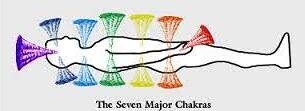
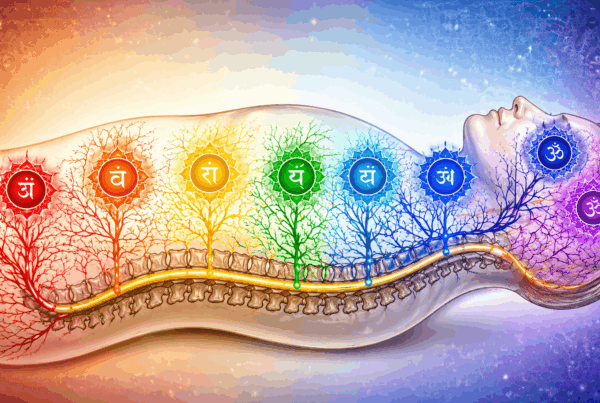
I explore this idea more deeply in my book The Language of the Chakras – Learn What Your Body Is Telling You, where I look at how the body, mind, and energy system work together to guide us towards greater awareness.
Available on Amazon: https://www.amazon.com/dp/B0DVWDSPSM