6 Steps to Create Balance and Wellbeing in Your Life
Over many years of seeing clients, I have noticed that for a person to move forward to a healthier,
more balanced version of themselves, a few things need to happen:
- Let Go of the Past (Decluttering the Mind)
Every time we relive a past event in our minds, our body relives the experience too, and it impacts our hormones, muscles, organs, and nervous system.
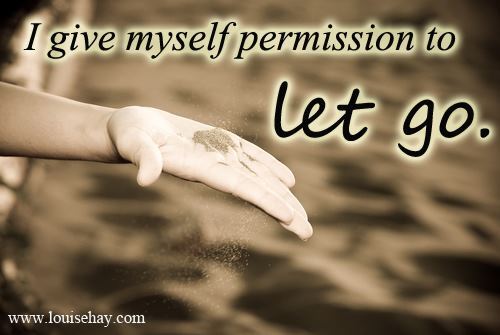
It is more challenging to move forward until we can let go of the past. Our destiny is calling us, but if we hold onto the ‘anchor’ of past stresses, anger, and injustices, we will struggle to move forward. It is like having a sore that is trying to heal, and we keep picking at it while wondering why it will not heal. Learn to leave it alone!
- We hold the key to the ‘prison door’ of our past.
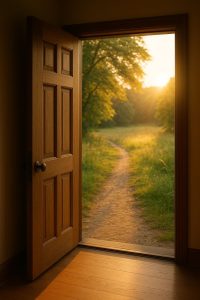
The path ahead is now clear
- Even one step toward the present is progress.
- It is a sign of strength to ask for help — counselling can be an important step in healing.
Key Reflection: “Why do I need to hold on to that story?”
2. Loving and Accepting Ourselves
We can never feel any better about life than we feel about ourselves!
If we do not feel good about ourselves, the mind will search for reasons outside of us — the past, relationships, work, or family to justify the way we feel. But the truth is: we are the common denominator in everything. Accepting ourselves the way we are does not mean we stop growing — it simply means we begin from a place of compassion. We are all learning on the job!
- Setting Healthy Wellbeing Boundaries
For example, saying “yes” when we really want to say “no.” Someone may phone us with a request, and we automatically say yes — then regret it later. Instead, practice saying, “Can you leave it with me, and I’ll call you later?”
This gives time to:
- Listen to your intuition.
- Avoid reacting out of habit.
- Protect yourself from manipulation.
Some people may unconsciously use illness as a boundary — e.g., “I’d love to, but I’m not feeling well.”
A healthier path is to consciously say no when we need to.

- Rescuing People (at the Expense of Ourselves)
It is wonderful to help people, but we serve them best as mentors, not constant rescuers.
- Be a positive example.
- Avoid giving too many uninvited opinions.
- Practise detachment if someone isn’t ready to hear advice.
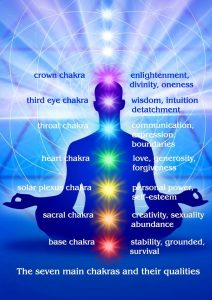
Unsolicited opinions can feel controlling. Instead, wait until someone asks. It is an honour when they do.
Or ask them: “Would you like my opinion?”
- Fears About Being “Too” Healthy (Yes, it does happen)
Sometimes our mind whispers:
- “If I had wonderful health, people might expect more from me.”
- “I’d expect more of myself if I were very healthy.”
The truth: You can be as healthy as you like, and still say yes or no to anything you like.

This may not have been the case earlier in our lives when we may have felt bullied, taken advantage
of or didn’t even have the vocabulary to express or speak up.
- Decluttering – Is It Time to Let Go?
Decluttering (physically, mentally, and emotionally) is a powerful personal growth tool.
The clutter in our lives reflects our mental and emotional state.
Decluttering means letting go of:
- Old objects, thoughts, and emotions.
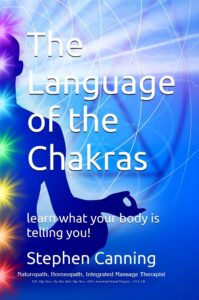
Book cover titled “The Language of the Chakras” by Stephen Canning, focusing on body awareness and energy healing through chakras.https://www.amazon.com/dp/B0DVWDSPSM
Aim to let go of anything that is:
- Cluttering and messing up your life.
- Bringing back painful memories.
- Holding you back from your full potential.
- Contributing to anxiety and stress.
- Making you feel crowded, stagnant, or smothered.
How to Begin Physical Decluttering
- Start small (e.g., one drawer).
- Keep sentimental items if they truly uplift you.
- Keep only what adds to your quality of life.
- Talk to a friend or counsellor if emotions surface.
Questions to Ask Yourself
- Why am I keeping it?
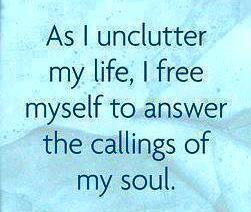
I choose to unclutter my life!
- Do I like it?
- Do I use it?
- How does it make me feel?
- Will I ever fix it?
- Do I really need it?
Remember: Rearranging our surroundings is often synonymous with rearranging our lives.
For more Wellbeing suggestions: Chakra Wisdom – Articles
For more resources: Chakra Wisdom Resources
If you are struggling with your thoughts, interactions, or experiencing a personal crisis,
it is highly recommended to seek help from a doctor, mental health professional, counsellor, or therapist. Asking for help is a sign of strength, not weakness.
Instagram link: Instagram